
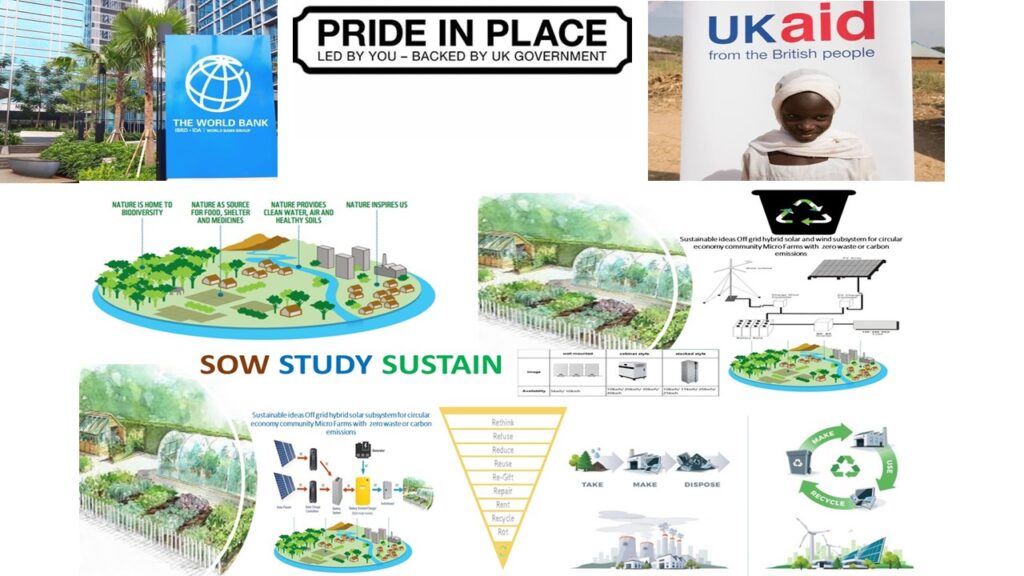
This week, the World Bank quietly retired its 45% climate lending target. The reason given on paper was a shift to outcome-focused development. The reality? Sustained political pressure from the U.S. Treasury, which labeled the measurable target myopic. This has naturally divided the word salad spouting new professional class and thought leaders, largely depending on who pays them, rather than community common sense.
By removing the one number that made their accountability measurable, cartel owned and run global institutions have sent a clear message, Ambition is high, but accountability is optional. Without hard targets, we simply cannot measure progress. If there is something this summer’s prolonged heatwave is teaching us, it’s that we need immediate adaptation, not just distant ambition.
At the same time, the IMF and Western nations are quietly pulling back from Sub-Saharan Africa with bilateral aid dropping by over a quarter in a single year. It is short-sighted, self-serving and geopolitically blind, especially as the expanded BRICS bloc and China’s Belt and Road Initiative step into that funding vacuum with massive, long-term infrastructure investment. This macro-geopolitical failure is exactly why the Sow Study Sustain model exists and it redefines the entire Pride in Place agenda.
Real civic pride cannot be bought with an irregular government grant or dictated by the fluctuating budgets of the World Bank. Genuine Pride in Place is an engineered consequence of local resilience formerly known as self-reliance. It is generated the exact moment a community stops waiting for distant, extractive capital to trickle down, and instead takes absolute, circular ownership of the physical and digital assets right where they live. We don’t need a multi-billion dollar fund to change a local landscape, we just need to close the loops right here on the ground. You see once set up circular economy systems are the gifts that keep on giving if the greedy make way for the needy.
In the Soil: Cultivating Civic Pride is Sow, Study, Sustain in Action
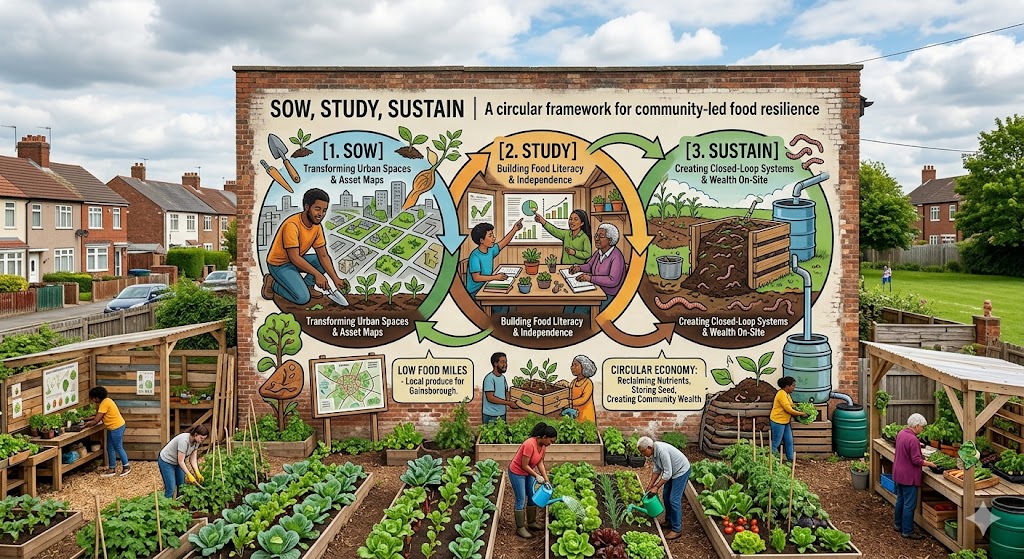
While global lenders drop their targets, our schools and community hubs are also failing to hit theirs. We can build pride in place by moving children from screens to scenes, transforming unloved or underutilised local spaces into vibrant agricultural hubs.
- The Closed-Loop Outcome: We aren’t trading in abstract carbon credits. Our outcomes would be visible on the street corner and in the school grounds: fresh food grown by young hands, zero food miles, organic waste diverted back into the soil and the future generation learning real science through practical enquiry.
- The Power of Ownership: When children and families physically transform their local environment to produce food, they develop a profound connection to their neighborhood. You cannot extract pride from a community that has learned how to sustain itself.
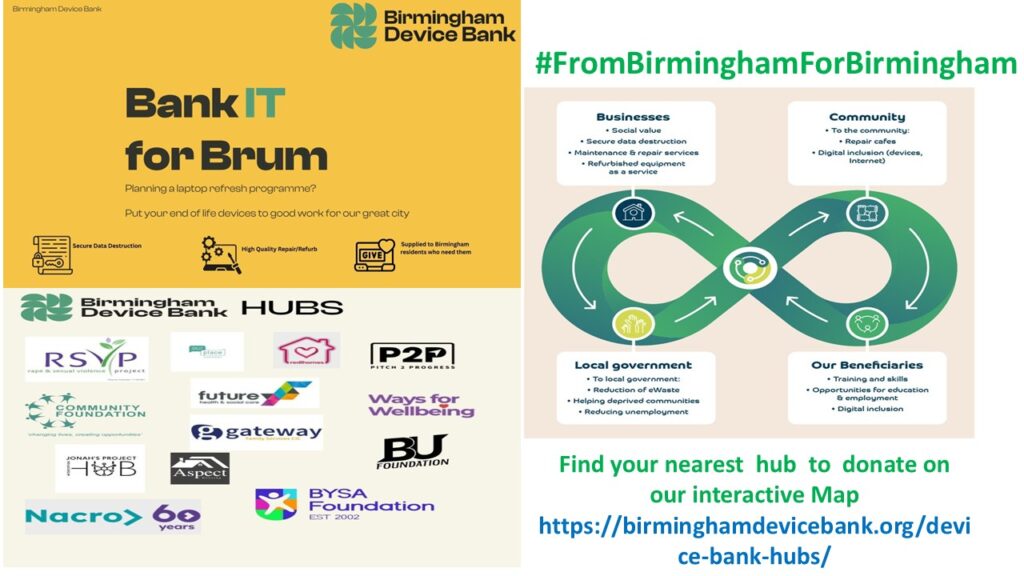
Digital Inclusion as a Local Asset Lessons from the Birmingham Device Bank
You cannot have true pride in place if a significant portion of the community is locked out of the modern economy thanks to a national over local city wide approach. Environmental sustainability and digital equity are two sides of the same coin. True community wealth building means taking the wasted assets of the current system, whether that is unloved local soil or retired corporate IT equipment, then recirculating them to elevate the whole neighbourhood.
- Intercepting the Waste Stream: Just as we intercept organic material to rebuild local soil, the Birmingham Device Bank model intercepts corporate IT equipment before it hits a landfill or leaves the city so the outsiders profit.
- Hyper-Local Retention: Instead of letting local corporate tech be discarded or shipped away, it is refurbished locally and placed directly into the hands of jobseekers and digitally excluded families.
- Restoring Local Agency: Giving an individual the digital tools to access green skills training, document local food growing projects, and secure employment doesn’t just build economic mobility, it restores dignity and agency to the local area. We are taking what the take-make-waste” system labels trash and turning it into handheld civic infrastructure.
The Structural Reality: Closing the Loops Because the Top Won’t
To truly understand why the ground-up approach builds genuine pride and resilience where global institutions fail, we have to look at the structural difference in how resources are treated:

The Bottom Line
Let the global institutions debate their spreadsheets and adjust their political alignments. Out here in the fresh air, we are busy planting the seeds of a self-reliant future. When global systems prove they are too short-sighted to protect localized food security or digital equity, hyper-local circular models cease to be just an educational exercise—they become our primary strategy for building a community we can be proud of.
Change the Screen. Close the Loop. Own the Place.