
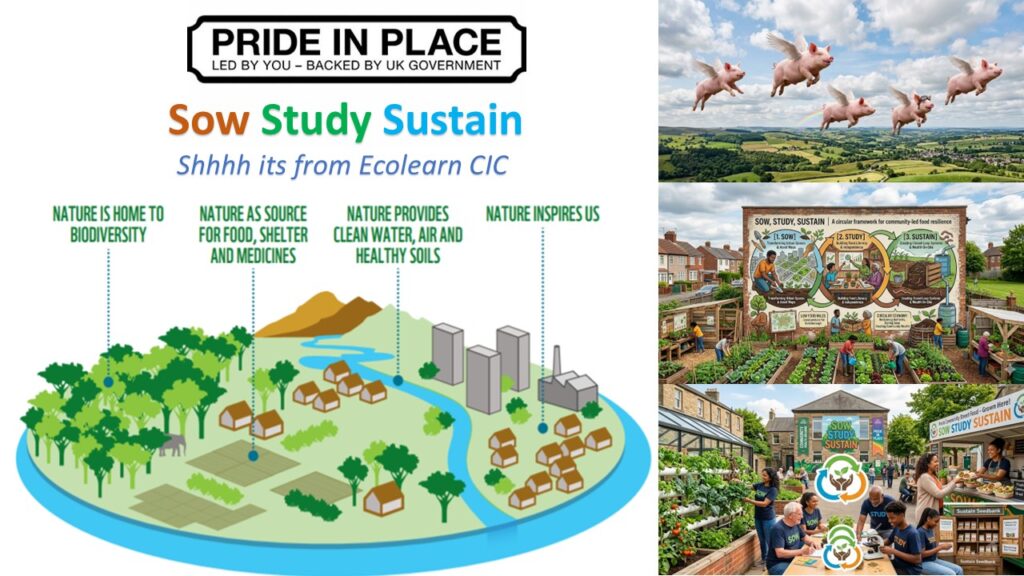
We suddenly hear talk of “Pride in Place” but never get beyond the first Gin & Tonic on “Community Wealth Building” in UK policy circles. They are beautiful phrases, frequently deployed in Westminster press releases and local authority word salad strategies. However the cupboard is bare, the crash is coming so little caesars fiddling while Rome burns peddling press releases and local authority strategies is super well past its sell by date. No surprise then that when we look closely at how the funding actually flows, a stark, structural contradiction emerges.
The Gatekeeper Fatigue and Institutional Bloat
Despite years of central cuts, a distinct institutional public sector bloat persists within local government just as it does within the Multi Academy Trusts sucking our schools dry. Incredibly nearly 4,733 local council employees across the UK earn over £100k a year, sitting atop complex networks of commissioning boards, procurement matrices and those gatekeeper funding structures. Try for transparency in disappointing funding outcomes or heaven forbid getting a job at one and the responses would make make a Chicago teamster or any crony capitalists blush
As the selfie loving would be OBE cunning but clever corporate animals in councils have deduced, it is time to pivot away from direct delivery toward managing these complex administrative frameworks. So its money for old rope meets blinged up cause celeb in the reality TV mould as the Town Hall Rich list sprinkle some glitter in the hoods. But every clever but damaging magic money tree scheme takes root, it shamelessly treats the voluntary, community and social enterprise (VCSE) sector as low-cost delivery partner mugs. This dynamic creates three distinct pressure points that stifle local growth:
- Administrative Attrition: Central government or NHS funding pots for health and wellbeing are without conscience and, as a matter of routine, swallowed by top-heavy administration. By the time funding trickles down through Tier 1 gatekeepers, only a tiny fraction remains for the front line. I remember when we applied for £6k and were expected to stretch £1,000 with the full admin layer and tick boxes expected – and the community fund concerned has gone from strength to strength.
- The Professional-Volunteer Divide: Formal tick box & governance institutions hold the paid, pensioned roles, while the actual resource-heavy execution is handed off to volunteers. The suited and booted system increasingly expects local pleb champions to do it all “for the love of it like a good sport”, as those back at the counting house treat community champions goodwill as an infinite, free resource to further their little public sector empire and career. The growing westminster bubble extension, a now huge new class of professional word salad thought leaders with non jobs, are poisoning the well and we can’t even understand why.
- Stalling the Circular Economy: True Community Wealth Building is supposed to redirect wealth back into the local economy through anchor institutions buying from local cooperatives and mutually owned businesses. When councils act merely as contract managers using volunteers as cheap labour, money is trapped in municipal overheads rather than seeding local trading loops. Somehow Social Value never seems to get beyond litter picking and selfies as hard hat meets high viz with 5 inch heels or designer wellies
Drip feeding community groups on a starvation diet of short-term micro-grants means they can never build real asset resilience. If we want to see a circular economy that actually succeeds, this extractive relationship needs a complete rewrite. We don’t need more administrative layers, we need functional, hyper-local wealth loops that go beyond financial and GDP into degrowth or digital credits rather than greenwashing carbon credits.
The Solution, The SSS Circular Super Grower to Street Food Blueprint
True Pride in Place isn’t generated by a council-branded marketing campaign or a new procurement matrix. It is built when a community owns and asset locks its assets, therefore producing its own value and retaining its own wealth. Keen to share best practice the Sow Study Sustain model offers a scalable, national framework to break this dependency loop by connecting hyper-local growing directly to economic independence:
1. Sow: The Seedbank and Hyper-Local Production
Instead of waiting for top down funding to trickle through Tier 1 gatekeepers, communities start by securing the ultimate foundational asset: their own food supply and seed security. Establishing localised seedbank’s keeps biological and economic resilience right where it belongs at street level.
2. Study: Circular Skills over Bureaucracy
We shift the focus away from filling out endless, complex monitoring loops for gatekeeper networks serving the Data Industrial Complex. Instead, the focus moves to building real-world, localised knowledge in circular economy loops, vertical farming and sustainable resource management. It turns community champions from bid writers and box tickers back into active builders.
3. Sustain: From Super Grower to Street Food
This is where the loop closes and community wealth building becomes self-sustaining. By taking hyper-local, vertically grown produce and feeding it directly into community-led street food ventures, we create an independent trading engine. The profit doesn’t leak out to national contractors or get trapped in municipal overheads it stays in the neighborhood to fund local wellbeing.
The crash is coming so little caesars fiddling while Rome burns is passed its sell by date. Before the Digital Feudal Matrix closes the loop over the next few years we must move away from treating the voluntary sector as cheap, outsourced labour for cash-strapped councils who are doing very well for the new elite serving class. We don’t need another bunch of middlemen scraping us like the AI model of the Big Tech Rent Seekers. True localised resilience means giving communities direct control over assets, production, and revenues.