Last week was a seesaw for what is left of outdoor education providers in the UK. We witnessed a fascinating push-and-pull between systemic funding overhauls and a grassroots legislative push to give every child the right to learn in nature. A ten minute members bill first reading is the Christmas come early school play mixed with a pantomime cast of heroes and villains , as Boo, Hiss, the Department for Education (DfE) announced a major pivot regarding school sports and activity funding.
For context, the long-standing £320 million PE and Sport Premium (which went directly to primary school budgets) is officially being phased out. It is being replaced by a centralised network run by a national provider, operating on roughly 22% less annual funding. While the government claims this will cut bureaucratic duplication and streamline accountability, school leaders have been deeply worried about mid-budget shortfalls. In response to intense pushback from headteachers, the government is increasing its transitional funding pot by 50%, boosting it to £150 million, and delaying the rollout of its new “partnerships network” until April 2027. This new buffer gives schools a median average of £8,000 this academic year to soften the blow.
But here is where it gets really interesting for the EcoLearn and independent outdoor learning community. This funding drama is unfolding at the exact same time that Caroline Voaden’s and Tim Farron’s Private Members’ Bill for Outdoor Learning just cleared its First Reading in Parliament last week. This bill seemingly heavily championed by the Institute for Outdoor Learning aims to make outdoor education a statutory right for every single school pupil, ensuring that learning in nature isn’t just a nice-to-have extra-curricular activity, but a core component of the British curriculum.
Why This Matters: The Collision of Funding and Philosophy
The DfE’s new partnerships network model threatens to shift from a purely sports-centric focus to broader physical activity opportunities and specialist practitioners. This is therefore a critical window for outdoor educators, because, as direct sports funding shrinks, schools will need to be incredibly strategic. Outdoor learning, whether via Forest Schools or Ecolearn LOL, school gardening, or nature-based geography and science, is one of the most cost-effective ways to deliver on both physical activity and mental well-being simultaneously.
When you look at this through the lens of the new Outdoor Learning Bill, the message is clear: we cannot separate physical health from environmental connection. If the bill succeeds in establishing outdoor learning as a statutory right, the new DfE network will have to accommodate and fund specialist practitioners who know how to take classrooms beyond four walls.
What This Means for Your School Next September
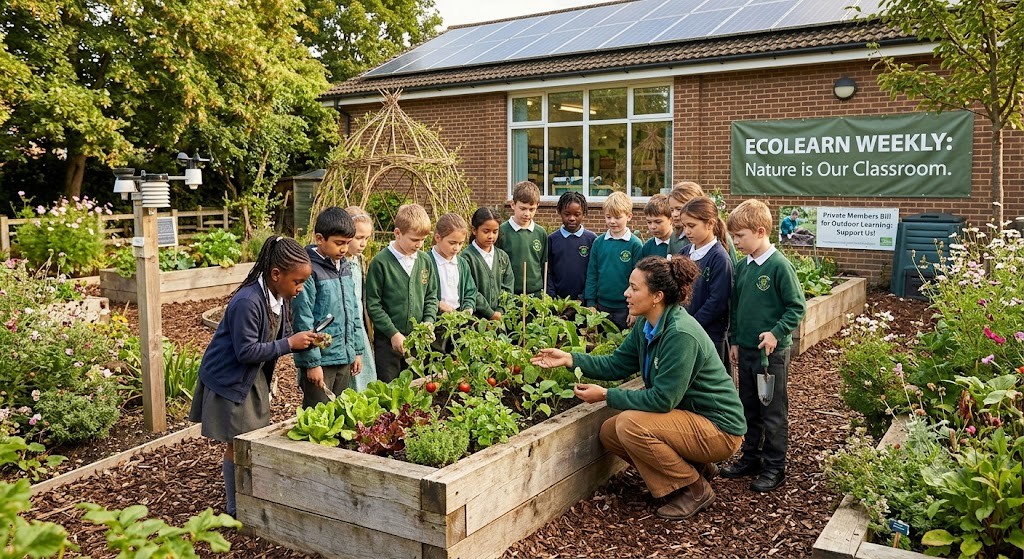
While the policy landscape shifts at Westminster, here is what you need to track on the ground:
- September 2026: The DfE will publish the official guidance and grant conditions for the £150 million transition funding.
- October 2026: Look out for your school’s specific allocation.
- November 2026: The national delivery partner will be appointed. This is when we will get our first look at the three support pathways (universal support, targeted intervention, and requested help).
- January – April 2027: The transition phase begins, with full delivery of the new partnership system launching in April.
The EcoLearn Strategy: Don’t let your outdoor budget get swallowed up entirely by traditional sports coaching. Use the incoming autumn transition guidance to see how you can leverage the new specialist practitioner pathway to protect and expand your environmental and outdoor learning programs.
- Audit Your Spatial Assets: Before the DfE guidelines drop in September, map out how your school grounds are currently being used for physical activity vs. academic outdoor learning.
- Write to Your MP: The Private Members’ Bill has passed its first hurdle, but it needs serious momentum to become law. Drop a quick note to your local MP highlighting how outdoor learning transformed student engagement or well-being in your classroom this past year.
- Or take a look at this…….